
Author Guidelines
Author Guidelines
GENERAL WRITER'S GUIDELINES
-
please download the template author here
-
open the template using MS application. word. In order to make the process of converting to the GJBE journal template faster, it is enough to copy the contents of the writing in the initial article draft to the GJBE template so as not to change the shape of the paper and others.
-
make sure to use the Mendeley application to facilitate the citation process and also display a bibliography.
-
Also make sure you open Google Scholar to find the references you need.
-
Articles can be made in English
GUIDELINES FOR MAKING TEXT
1. Article title
-
Technically
-
Research Title Written with Capitalize Each Word Style (capital letter at the beginning of the word)
-
Font type Cambria size 14 bold
-
Tittle does not contain abbreviations
-
Tittle no more than 12 words
-
-
In substance
-
The title must represent the contents of the research
-
The title must match the focus and scope
-
The title must be made clear and straightforward
-
2. Abstract
-
Technically
-
Abstract contains 150-350 words
-
Use Book Antiqua font size 10 pt
-
spacing of 1.0
-
Create keywords of at least 3 words
-
Abstract made in English
-
-
In Subtance
-
iAbstract contains Background : the core focus of the problem that underlies your research. Purposes : briefly explain the purpose of your research. Method: the type of research method used. Location and time (If the literature study does not need to be written in this section, just replace it with literature sources, just replace it with literature sources) : briefly explain. Subjects: this contains samples and populations or primary and secondary data. Data collection techniques: briefly explain. data analysis: briefly explain. Results: focus on the findings of your research results. Implications or contributions : briefly explain. Abstract contains 150-350 words
-
3. Introduction
-
Technically
-
Use Book Antiqua font size 12 pt
-
spacing of 1.15
-
the beginning of the writing paragraph is indented to a depth of 1 cm
-
-
In Subtance
-
Explain the global topic of your research. then convey the GAP or gap that occurs between the ideal condition and the current real condition, you must include the problem in this background. after that, review at least 3 previous studies related to your research topic. Clearly identify the novelty of your research by showing aspects that have not been discussed in previous research to show the novelty of your research and clarify the state of the art of your research. then explain what the urgency of your research is, why your research is important to do. at the end of the introductory chapter you explain the purpose of your research
-
4. Methodology
-
Technically
-
Use Book Antiqua font size 12 pt
-
spacing of 1.15
-
the beginning of the writing paragraph is indented to a depth of 1 cm
-
-
In Subtance
-
Research Model. Describe the research approach and methods chosen in the study.Explain the reasons why you used that research method.
-
Partcipant. Include the research population and research sample or participants including primary and secondary data
-
Location and Time. Describe in detail the location of your research and the time
-
Data Collection Tools. Then explain what data collection techniques you use, explain in detail what the indicators and aspects are
-
Data Analysis Techniques. Describe the data analysis technique used, how is it implemented in your research, explain the stages. If the data analysis technique uses an application, if it uses a data processing application, what is the condition of the application. It is preferable if you show a picture of your research design flowchart
-
5. Results and Improvements
-
Techbically
-
Use Book Antiqua font size 12 pt
-
spacing of 1.15
-
the beginning of the writing paragraph is indented to a depth of 1 cm
-
-
In Subtance
-
Finding. Research results can be listed in the form of formulas, tables, graphs and pictures. In the discussion section, you can discuss what is the result of research related to the relevance and correlation of the theories on the chosen topic or the results of previous studies that can be obtained from books, journals and other sources.
-
Discussion. In compiling the discussion, researchers are required to develop a comprehensive analysis that connects empirical findings with a solid theoretical framework. The discussion must include an in-depth interpretation of the research results, using a critical approach that systematically links data, relevant theories, and previous research contexts. Try to present in the discussion section in the form of a description and no longer display formulas, tables or graphs.
- Implication & Contribution. Add the implications or impacts of the results of this research, explain the impact or contribution of your findings to the practical, theoretical and methodological aspects of the field of study. The “Research Contribution” section should clearly and unequivocally state the major contributions of the research by identifying the novelty of the findings, explaining how the research fills an existing knowledge gap, and articulating its practical or theoretical significance for the field of study, practitioners, or society
-
6. Conclusion
-
Technically
-
Use Book Antiqua font size 12 pt
-
spacing of 1.15
-
the beginning of the writing paragraph is indented to a depth of 1 cm
-
-
In Subtance
-
Conclusions must refer to the formulation of the problem and be relevant to the objectives of this research. Conclusions do not reiterate the results of the research but are rather concise statements that describe the entire research process. There are no bullet points in the conclusion.
- In the second paragraph of the conclusion, explain the limitations of your research, then provide recommendations for further research to open new paths of exploration for further researchers to expand the scope and deepen understanding of the topic you have researched
-
7. Reference
-
Tecnically
-
Use the bibliography using the Mendeley application
-
how to include a bibliography using Mendeley, namely: 1) open the Mendeley application; 2) select the references menu; 3) then select insert bibliography
-
to determine the style of the bibliography following the citation style. the way to determine the style of citation is by selecting the style, then selecting the American Psychological Association 7th Edition
-
an example of a bibliography using the American Psychological Association 7th Edition style, which is as follows:
-
example:Arthur, J. (2016). Convergence on policy goals: Character education in East Asia and England. Journal of International and Comparative Education (JICE), 59–71.
-
-
-
In Subtance
-
use reference sources in the bibliography for the last 10 years if from books and the last 5 years if from journals,
-
reference sources in the bibliography of at least 20 references
-
prioritize reference sources in the bibliography of journals with a minimum composition of 80% from scientific journals and the rest can be from books or other sources.
-
8. Supporting data
-
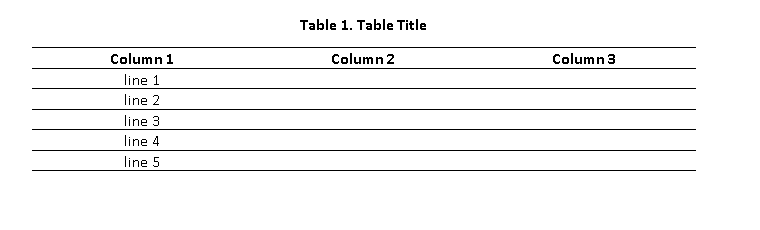
Supporting data in this study can be in the form of pictures, tables, graphs, diagrams and other forms. The following below is an example of its presentation.
-
Table example
-
-
-
Example Image
-


-
-
graphic example
-

-
Every time you try to include data from figures, tables, graphs and other data sources, mention the figures, tables or graphs again, for example: "based on the table above" or "if referring to the graph "and various other forms of editorial.
HOW TO SUBMIT AN ARTICLE?
1. Register an account
-
the author registers an account first at this link.
-
fill in the required fields

2. Submit Writing
-
after the account creation process is complete, proceed with submitting articles by clicking "make a new submission"

-
check all requests then click "save and continue"

-
upload the file by clicking "upload file" then click "save and continue" to continue to the next stage
-
fill in the article title, abstract and other requests then click "save and continue" to continue to the next stage

-
If you have filled in all the article and author data, the next step is to click "Finish Submissions" to complete the journal submission process.

-
after completing the journal submission process, the author can monitor the progress of the writing whether the writing is accepted or rejected.


