
Supporting Elementary Students' Science Achievement in Electrical Energy Through Student Teams-Achievement Divisions Cooperative Learning
DOI:
https://doi.org/10.61227/v90kgp74Keywords:
cooperative learning, STAD, satisfaction, science achievementAbstract
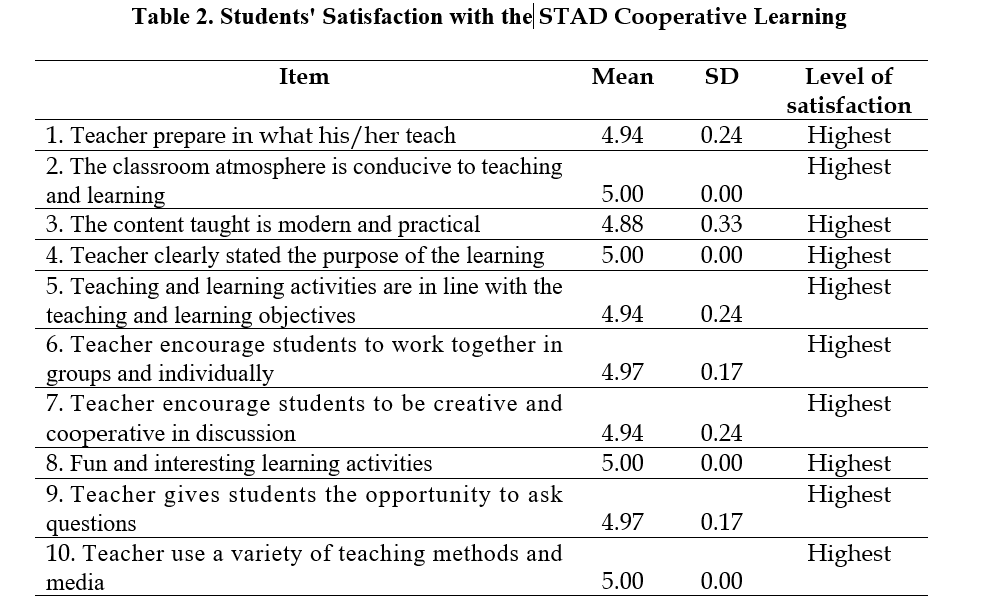
This experimental research, a one-group pretest-posttest design aims to enhance third-grade students' understanding of electrical energy and their academic performance by implementing the STAD approach to cooperative learning. The initiative will focus on the study of science both before and after students acquire knowledge of electrical energy through technical cooperative learning management. Additionally, the study aims to examine students' satisfaction with the management of cooperative learning. The participants were 32 of grade 3 students in the second semester of the 2025 academic year, selected using a cluster random sampling process. Instruments used to analyze 20 science accomplishment assessments included a learning management strategy for the science subject of electrical energy. The instruments included the STAD science lesson plan and a satisfaction questionnaire regarding cooperative learning management. The results indicated that the performance in science topics post-test was statistical significantly higher than pre-test at .05. Furthermore, the satisfaction level of third-grade students with the science lesson on electrical energy, taught using the STAD cooperative learning was found to be highest level. The study can be used for teachers to leverage students’ learning achievement and guide students in classroom collaborating.
Downloads
References
Clarke, K. L. (Ed.). (2022). Self-care and stress management for academic well-being. IGI Global.
Fauziyyah, L. N., Kuswendi, U., Nurfurqon, F. F., & Murni, S. (2024). student team achievement divisions (STAD) type cooperative learning model to improve the cooperation capability of class iv primary students. Journal of Educational Experts (JEE), 7(2), 64-71.
Hayati, E. M., Purwanto, A., & Hidayat, D. R. (2023). Analysis of the cooperative learning effectiveness on students’ critical thinking skills in science learning for primary students. AL-ISHLAH Jurnal Pendidikan, 15(1), 1145-1153.
Jacobs, G. M., &Renandya, W. A. (2019). Student centered cooperative learning: Linking concepts in education to promote student learning. Springer.
Johnson, D. W., Johnson, R. T., & Holubec, E. J. (1994). The new circles of learning: Cooperation in the classroom and school. ASCD.
Kusuma, T., Apriani, R., &Hotnida, D. (2024). Implementation of STAD cooperative learning model to improve science learning outcomes of grade VI students at Sd Negeri 37 Bengkulu City. Indonesian Journal of Pedagogy and Teacher Education, 2(3), 71-76.
Marawar, A. A., & Chaudhari, A. D. B. (2024). The future of learning: Innovations In education. Academic Guru Publishing House.
Maula, H. M., & Khalim, A. D. N. (2026). Implementation of the STAD type cooperative learning model to improve students' learning motivation. PrimEdu: Asian Journal of Primary Education, 1(1), 37-49.
Rad, H. S., Namaziandost, E., & Razmi, M. H. (2022). Integrating STAD and flipped learning in expository writing skills: Impacts on students’ achievement and perceptions. Journal of Research on Technology in Education, 55(4), 710-726.
Rahman, A. (2025). The effect of the implementation of the cooperative learning model type student teams achievement division (STAD) on creativity, initiative, motivation and student learning outcomes. Jurnal Iqra': Kajian Ilmu Pendidikan, 10(1), 54-74.
Rorimpandey, W. H., Maaluas, F., Mangangantung, J., &Suryanto, H. (2022). The student teams achievement divisions learning model in its influence on the motivation and science learning outcomes of elementary school students. Journal of Innovation in Educational and Cultural Research, 3(3), 345-354.
Ross, M. (2025). Future of education. Publifye AS.
Saputra, A., Asmara, D. N., &Astarina, L. (2025). The effect of the cooperative learning model: Student teams achievement division (STAD) on science learning outcomes of fourth grade students at SD Negeri 01 Tiumang. TOFEDU: The Future of Education Journal, 4(6), 2206–2211.
Suendarti, M., &Virgana, V. (2022). Elevating natural science learning achievement: cooperative learning and learning interest. Journal of Education and Learning (EduLearn), 16(1), 114-120.
Sulfiani, B., Nurhayati, N., Abdullah, E., Takwa, E. S., Fitriani, F., & Nesti, V. A. (2024). Increasing student learning interest through cooperative learning. Journal La Edusci, 5(3), 178-197.
Susiloningsih, E., Sumantri, M. S., & Marini, A. (2023). Experiential learning model in science learning: Systematic literature review. Jurnal Penelitian Pendidikan IPA, 9(9), 550-557.
Swargiary, K. (2024). Educational management. ERA.
Tiantong, M., &Teemuangsai, S. (2013). Student team achievement divisions (STAD) technique through the moodle to enhance learning achievement. International Education Studies, 6(4), 85-92.
Tomlinson, C. A., & Imbeau, M. B. (2023). Leading and managing a differentiated classroom. ASCD.
Zurweni, Z., Kurniawan, D. A., & Triani, E. (2022). A comparative study: Cooperative learning in science learning. Jurnal Pendidikan Dan Pengajaran, 55(1), 115-126
Additional Files
Published
Issue
Section
License
Copyright (c) 2026 authors

This work is licensed under a Creative Commons Attribution 4.0 International License.
How to Cite


