
Exploring the Use of Artificial Intelligence in Designing Course Descriptions
A Study at Abu IssaFaculty of Education, University of Zawia, Libya
DOI:
https://doi.org/10.61227/jetti.v3i1.182Keywords:
Artificial Intelligence, Course Description, Education, TrainingAbstract
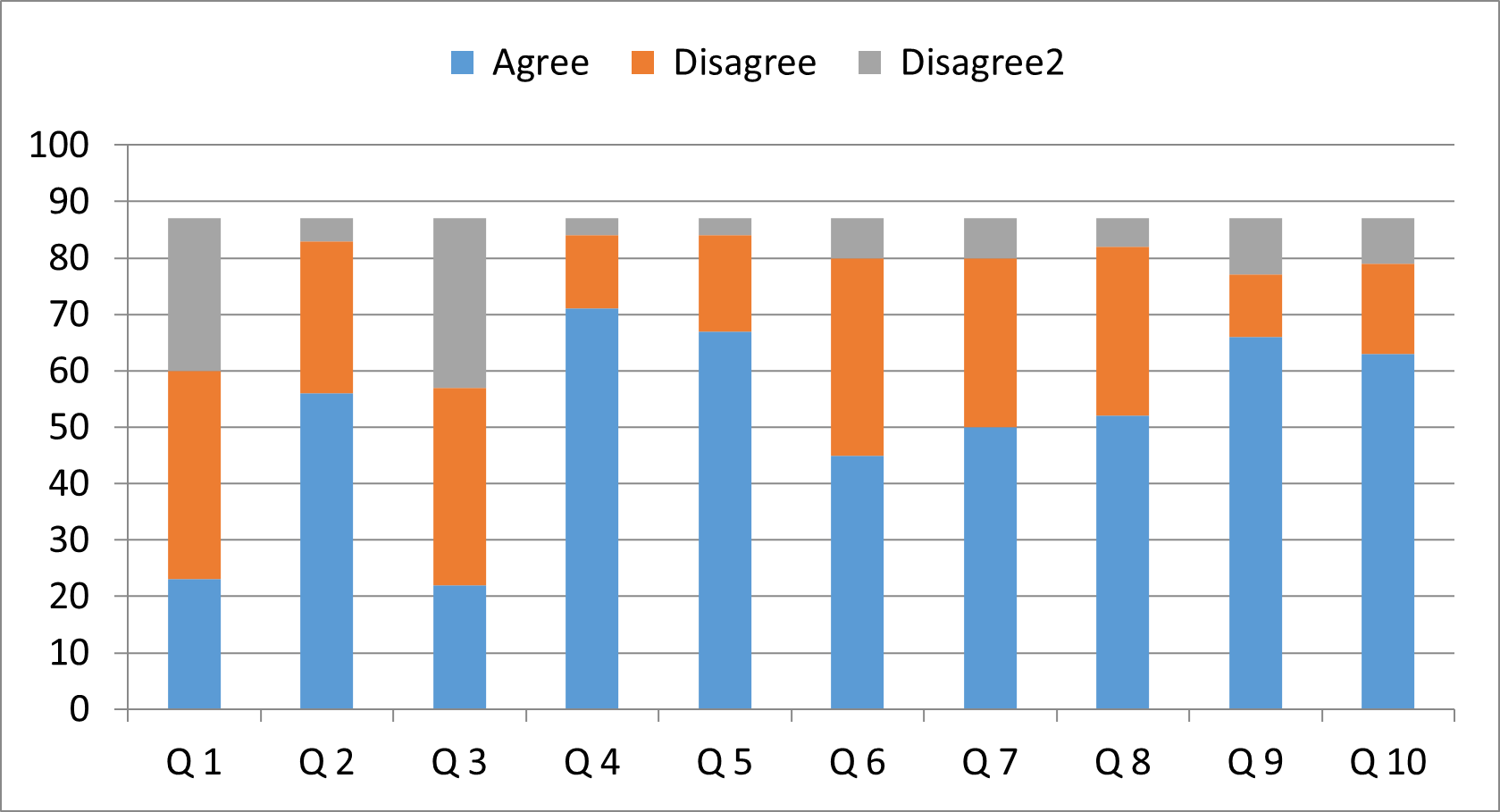
This study investigates faculty members’ perceptions regarding the integration of Artificial Intelligence (AI) in the design and development of course descriptions atAbu Issa faculty of Education, University of Zawia, Libya, which is a context where higher education institutions are increasingly exploring AI to improve curriculum quality but face challenges of limited training, institutional readiness, and skepticism about its reliability. By using a descriptive research design, the study examined data from 87 faculty members across various disciplines through a structured questionnaire administered after a hands-on AI training workshop. Participants engaged with AI tools in authentic curriculum development tasks before reflecting on their experiences. Data were analyzed using descriptive statistical techniques: frequencies, percentages, means, and standard deviations, to identify patterns and summarize perceptions without inferring causal relationships. The findings reveal a moderately positive attitude toward the use of AI, especially in enhancing efficiency, aligning with accreditation standards, and updating course content. However, notable reservations emerged concerning the reliability of AI for language refinement, institutional support, and faculty preparedness. Despite recognizing AI’s transformative potential in curriculum design, participants expressed concerns about data security, the loss of human creativity, and the need for intensive training. The study highlights the need for capacity building initiatives and institutional support to ensure effective and equitable AI integration in academic settings. Finally, it recommends future research with broader samples, longitudinal designs, and objective outcome measures to deepen understanding and guide responsible AI adoption in higher education.
Downloads
References
Abdulghani, N. A., & Alrumayh, S. H. (2025). An Islamic legal perspective on contemporary health issues: Integrating traditional and modern approaches. Jurnal Ilmu Psikologi dan Kesehatan (SIKONTAN), 3(4), 187–198. https://doi.org/10.47353/sikontan.v3i4.2785
Almajri, S., Baroud, N., Alouzi, K. M., & Kasheem, A. (2025). Islamic psychology: An integrative approach to human behavior and mental well-being. Bulletin of Islamic Research, 3(4), 687–704. https://doi.org/10.69526/bir.v3i4.353
Alouzi, K. M. (2024). Assessment of Requirements for the Creation of Course Materials for English as a Second Language for Students Majoring in Subjects Other Than English. Majapahit Journal of English Studies, 2(1), 19–34. https://doi.org/10.69965/mjes.v2i1.105
Alriteemi, A., Masuwd, M., Masoud, M., Alsayd, A., Aboujanah, Y., Alrumayh, S., & Ayad, N. (2025). The Geography of Place in the Qur’anic Narrative: A Hermeneutical Study of the Story of Moses and Al-Khidr through the Lenses of Philosophical Symbolism and Pedagogical Perception. Tebuireng: Journal of Islamic Studies and Society, 6(1), 119–138. https://doi.org/10.33752/tjiss.v6i1.9813
Alrumayh, S., Ayad, N., Alouzi, K., Ibrahim, D., Abdullah, M., Masoud, M., & Kasheem, M. (2025). Perceptions of Islamic Studies, Sharia, and Law Students Towards the Use of Artificial Intelligence in English Learning. Action Research Journal Indonesia (ARJI), 7(3), 2238 – 2256. https://doi.org/10.61227/arji.v7i3.504
Alsayd, A., Masoud , M., Abdullah, M., Alzletni, N., Maati, A., Barka, A., & Baroud, N. (2025). Postgraduate Students’ Usage Patterns, Perceptions, and Attitudes Toward Artificial Intelligence Applications in Learning: A Case Study of the University of Zawia, Libya. Journal of Education and Teacher Training Innovation, 3(1), 1–24. https://doi.org/10.61227/jetti.v3i1.149
Ayad, N., Masuwd, M. A., & Alrumayh, S. (2025). From riba to zakat: An analytical study of Islamic economic principles and their distinction from conventional economics. Bulletin of Islamic Research, 3(4), 733–752. https://doi.org/10.69526/bir.v3i4.358
Baker, T., & Smith, L. (2019). Educ-AI-tion rebooted? Exploring the future of artificial intelligence in schools and colleges. Nesta Foundation.
Baroud, N. (2024). A Systematic Comparison of Students Attitudes Toward Practical Work in Chemistry Department Faculty of Education, Zawia -University of Zawia: A Systematic Comparison of Students Attitudes Toward Practical Work . IJCER (International Journal of Chemistry Education Research), 8(2), 137–143. https://doi.org/10.20885/ijcer.vol8.iss2.art7
Baroud, N., & Aljarmi, A. (2025). Enhancing Students Understanding of Hybridization in Organic Compounds through a Flipped Classroom Approach Combined with Game-Based Learning . Jurnal Pijar Mipa, 20(3), 387–393. https://doi.org/10.29303/jpm.v20i3.8725
Baroud, N., Alouzi, K., Elfzzani, Z., Ayad, N., & Albshkar, H. (2024). Educators’ Perspectives on Using (AI) As A Content Creation Tool in Libyan Higher Education: A Case Study of The University of Zawia. JERIT: Journal of Educational Research and Innovation Technology, 1(2), 61–70. https://doi.org/10.34125/jerit.v1i2.12
Batista, J., Mesquita, A., & Carnaz, G. (2024). Generative AI and higher education: Trends, challenges, and future directions from a systematic literature review. Information, 15(11), 676. https://doi.org/10.3390/info15110676
Bennett, S., Maton, K., &Kervin, L. (2008). The ‘digital natives’ debate: A critical review of the evidence. British journal of educational technology, 39(5), 775-786.
Biggs, J., Tang, C., & Kennedy, G. (2022). Teaching for quality learning at university 5e. McGraw-hill education (UK).
Bond, M., Buntins, K., Bedenlier, S., Zawacki-Richter, O., & Kerres, M. (2020). Mapping research in student engagement and educational technology in higher education: A systematic evidence map. International journal of educational technology in higher education, 17(1), 2.
Broadbent, J., & Poon, W. L. (2015). Self-regulated learning strategies & academic achievement in online higher education learning environments: A systematic review. The internet and higher education, 27, 1-13.
Budiningsih, I., Oktapiani, M., Rijanto, W., & Masuwd, M. A. (2024). Comparative analysis of creative assignments, participatory collaborative learning, and students’ satisfaction in digital & non-digital learning media. Jurnal Pendidikan Progresif, 14(3), 1900–1913. http://dx.doi.org/10.23960/jpp.v14.i3.2024129
Cavedon, L., Harland, J., & Padgham, L. (1997). Problem based learning with technological support in an AI subject: description and evaluation. In Proceedings of the 2nd Australasian conference on Computer science education (pp. 191-200).
Davis, F. D. (1989). Perceived usefulness, perceived ease of use, and user acceptance of information technology. MIS quarterly, 319-340.
Ejjami, R. (2024). The future of learning: AI-based curriculum development. International Journal for Multidisciplinary Research, 6(4), 1-31.
Elihami, E., Masuwd, M. A., Sheerly, S., Ismail, I., Sitonda, S., & Sudirman, M. Y. (2024). Data-driven approaches in Islamic quality management and education technology for advancing sustainable development goals. JurnalPendidikanProgresif, 14(3), 1599-1616. http://dx.doi.org/10.23960/jpp.v14.i3.2024109
Firdaus, R., Fahmi, A., & Masuwd, M. (2024). Improving the quality of education through quality of service and education costs. Nidhomul Haq: Jurnal Manajemen Pendidikan Islam, 9(3), 756-768. https://doi.org/10.31538/ndhq.v9i3.63
Georgina, D. A., & Olson, M. R. (2008). Integration of technology in higher education: A review of faculty self-perceptions. The Internet and Higher Education, 11(1), 1-8. https://doi.org/10.1016/j.iheduc.2007.11.002
Hamidah, N., & Masuwd, M. A. (2024). An Examination of English Instruction in a Classroom That Includes Students with Diverse Needs: A Detailed Analysis. Majapahit Journal of English Studies, 1(2), 116–130. https://doi.org/10.69965/mjes.v1i2.83
Hasibuan, A. .,Nasution, I. F. A. ., & Masuwd, M. . (2024). Tarekat in the Digital Age: Transforming Spirituality for the Age of Technology . Religia, 27(1), 13–30. https://doi.org/10.28918/religia.v27i1.2306
Hassan, Z. Y. (2025). AI-Driven Horizons: Shaping the Future of Global Quality Assurance in Higher Education. AI and Ethics, Academic Integrity and the Future of Quality Assurance in Higher Education, 105.
Hilman, C., Ishom, M., Sarkawi, S., & Alouzi, K. M. (2024). Adoption of mobile-assisted language learning in improving college students' English listening skills. International Journal of Teaching and Learning, 2(10), 2711–2722.
Husayn, E., Alrumayh, S., Kasheem, M., Ibrahim, D., Alouzi, K., Shalghoum, N., & Almajri, S. (2025). The Impact of Artificial Intelligence on Knowledge Management: Faculty Perspectives from the University of Zawia’s Faculties of Economics, Management, and Law. Journal of Education and Teacher Training Innovation, 3(1), 52–66. https://doi.org/10.61227/jetti.v3i1.163
Ichwan, M. N., Ulama’i, A. H. A., Masuwd, M. A., & Abdulghani, N. A. (2024). Sufism And Quranic Interpretation: Bridging Spirituality, Culture, and Political Discourse in Muslim Societies . Ulumuna, 28(2), 655-680. https://doi.org/10.20414/ujis.v28i2.1082
Ifenthaler, D., &Yau, J. Y. K. (2020). Utilising learning analytics to support study success in higher education: a systematic review. Educational Technology Research and Development, 68(4), 1961-1990.
Kasheem, A. ., Baroud, N. ., & Almajri, S. . (2025). THE ROLE OF EMOTIONAL INTELLIGENCE IN ENHANCING TEACHER-STUDENT RELATIONSHIPS IN RURAL SCHOOLS. SIBATIK JOURNAL: Jurnal Ilmiah Bidang Sosial, Ekonomi, Budaya, Teknologi, Dan Pendidikan, 4(8), 1693–1704. https://doi.org/10.54443/sibatik.v4i8.3158
Luckin, R., & Holmes, W. (2016). Intelligence unleashed: An argument for AI in education.
Manshur, U., Hadi, N., & Abrahem, M. (2025). Classical Cooperative Learning Model for Reading Classic Literature : Enhancing Student Independence through Self-Regulation. Izdihar : Journal of Arabic Language Teaching, Linguistics, and Literature, 8, 105–120. https://doi.org/https://doi.org/10.22219/jiz.v8i1.36829
Masoud, M., Alsayd, A., & Kasheem, M. (2025). Global trends and challenges in teacher training: A bibliometric analysis (2019–2024). Bulletin of Islamic Research, 3(4), 705–732. https://doi.org/10.69526/bir.v3i4.356
Masuwd, M. A. (2025). Hadith, Law, And Orientalism: A Critical Study of Joseph Schacht’s Theoretical Contributions. Ad-dawl: Jurnal Islamic Studies, 1(1), 10-24.
Masuwd, M., Sumanik, E. D., Sarkawi, S., & Amer, M. A. B. (2024). Measuring foreign language anxiety: Concerning students’ motivation and their self-perception. Int. J. Teach. Learn, 2(8), 2087-2099.
Masyitah, M., Baiti, N., Nisa, U., & Masuwd, M. A. (2024). Parental Secure Attachment and Child Gender on Early Childhood Social-Emotional Development: A Quantitative Study. AlBanna: Jurnal Pendidikan Islam Anak Usia Dini, 4(2), 88–100. https://doi.org/10.24260/albanna.v4i2.3469
Padang, B., & Kasheem, M. (2025). Understanding Turnover Culture in Organizations: A Literature Review. Malacca: Journal of Management and Business Development, 1(2), 124–130. https://doi.org/10.69965/malacca.v1i2.134
Paisun, P., & Masuwd, M. (2024). Investigating the relationship between teacher self-efficacy and student achievement. Andragogi: Jurnal Pendidikan Dan Pembelajaran, 4(2), 94-108. https://doi.org/10.31538/adrg.v4i2.1303
Primarni, A., Masuwd, M., Makmudi, M., Fa’atin, S., & Nuhdi, A. (2025). The implementation of the theoretical humanism paradigm in holistic education. Journal of Research in Instructional, 5(1), 199-209. https://doi.org/10.30862/jri.v5i1.601
Riyadi, S., Ridha, M., Masuwd, M. A., &Abdulghani, N. A. (2024). Integrating Tradition and Modernity in Islamic Higher Education. WARAQAT: Jurnal Ilmu-Ilmu Keislaman, 9(2), 78-91. https://doi.org/10.51590/waraqat.v9i2.884
Ruslan, R., Faijah, N., Luthfiyah, L., & Alouzi, K. M. (2024). Facing the independent curriculum: Teacher challenges and strategies in the evaluation of Islamic religious education learning. Jurnal At-Tarbiyat: Jurnal Pendidikan Islam, 7(2). https://doi.org/10.37758/jat.v7i2.861
Schleiss, J., Laupichler, M. C., Raupach, T., & Stober, S. (2023). AI Course Design Planning Framework: Developing Domain-Specific AI Education Courses. Education Sciences, 13(9), 954. https://doi.org/10.3390/educsci13090954
Selwyn, N. (2019). Should robots replace teachers?: AI and the future of education. John Wiley & Sons.
Setiawan, D., Masuwd, M. A., Maliki, N., Laily, I. F., & Fitriyani, Y. (2023). Impact of Digital Storytelling for Developing Oral Communication Skills, Digital Literacy, and Learning Motivation Among Pre-service Elementary Teachers. International Journal of Educational Qualitative Quantitative Research, 2(2), 34–42. https://doi.org/10.58418/ijeqqr.v2i2.118
Syarifaturrahmatullah, S., Hidayat, A. F. S., Muhammad, A. A., Masood, A., & Masuwd, M. (2025). Exploration and Mapping of Methods for Researching Second Language Classrooms: Content Analysis based on Rod Ellis' book. El-Syaker: Samarinda International Journal of Language Studies, 2(2), 73-95. https://doi.org/10.64093/esijls.v2i2.524
Venkatesh, V., Morris, M. G., Davis, G. B., & Davis, F. D. (2003). User acceptance of information technology: Toward a unified view. MIS quarterly, 425-478.
Weerakoon, O., Leppänen, V., & Mäkilä, T. (2024). Enhancing pedagogy with generative AI: Video production from course descriptions. In Proceedings of the International Conference on Computer Systems and Technologies 2024 (pp. 249-255).
Yahya, N., Abdullah, M., & Masuwd, M. (2025). Development of Digital Education in Libya: Progress, Challenges, and Future Directions. International Journal of Education and Digital Learning (IJEDL), 3(5), 211–219. https://doi.org/10.47353/ijedl.v3i5.307
Yanto, M., Masuwd, M., & Wanto, D. (2024). Being a Moral Student: Content Analysis of Anti-Corruption Education Textbooks in Indonesia. QALAMUNA: Jurnal Pendidikan, Sosial, Dan Agama, 16(2), 867–880. https://doi.org/10.37680/qalamuna.v16i2.5262
Zawacki-Richter, O., Marín, V. I., Bond, M., & Gouverneur, F. (2019). Systematic review of research on artificial intelligence applications in higher education–where are the educators?. International journal of educational technology in higher education, 16(1), 1-27.
Additional Files
Published
Issue
Section
License
Copyright (c) 2025 Authors

This work is licensed under a Creative Commons Attribution 4.0 International License.
How to Cite


